admin
Admin
-
Joined
-
Last visited
Everything posted by admin
-
Guitar Beginners I will start a new series of tutorials now. I want to guide the total guitar beginners through the first really hard 6-12 months of learning guitar. The point is - when you start with guitar there is not much you can do till you have the technical abilities to grab chords - specially the barré chords, to play some lead guitar with simple melodies and to do your first bendings, the first vibrato's and and and.... This phase can be really frustrating because things take time and you can not make any shortcuts. But my job as an instructor is to keep you guys motivated in this time and still get you a creative and fun vibes into your beginner steps on guitar. My system is different then the regular ones and it works. I got many feedbacks from beginner students over many years. In these tutorials I will also show everything slow and very precise. The will come with the title index " Guitar Beginners - ..... " and will be also marked with this tag here in the search tags. Guitar Beginners For guidance during your process in those first 6-12 months I strongly recommend that you use the blog feature where you can write about your experience and your difficulties in order to get some professional advice. Blog Feature
-
Compression Settings Whick compression settings work if you want to ge a sound which cuts off the high frequencies in a soft way and make the sound soft ? Here's the problem - if you want to play fast with a pic and you want to attack each note the sound of the attack of the pic might be disturbing in way that it makes the sound of your runs somehow a bit hacked or uncomplete which causes that you don't get into a smooth fast playing flow as you would like to do so. A good example for that is that old style jazz guitar players solved this problem with the treble knob on there guitar to cut off the high frequencies in order to play fast and smooth runs with the pick. But the disadvantage of this is clear - since the high frequencies are cut off the sound looses is wide emotional spectrum because the high frequencies are missing. Now here comes a solution which I found which works - I am still not 100 % convinced but it's going in the right direction. That solves the problem with the runs - but still the sound still misses the emotional impact as it would not have any compression - so the search is going on.
-
That's really an interesting approach with the chords but in fact that can also work. I once had a student who did not know anything about scales, chords or theory but he was able to play fast over the entire fretboard after years of playing like this. But in fact it was hard to teach this student because he was unable to build up any types of structures in his playing. But for what he played it sounded quit good.
-
-
This one will be next :-) But in a way to jam with the Bo Diddley groove. That one is fun.
-
Updated Feature :
-
-
-
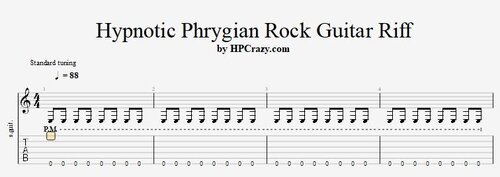 Here you find a very cool phrygian rock guitar riff with the backing track. These files are associated to this tutorial :Free
 -
-
-
Here I show you some nice and tasty minor smooth jazz guitar licks over the progression Fm7 / Fm7 / Db7 / C7 It's not only the licks - it's also about understanding how they are buildt and how you can start building your own licks and lines over standard progressions. Here you can download the files associated to this tutorial :
-
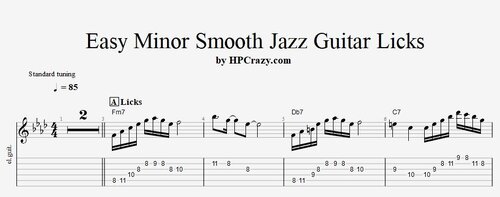 Here you find 3 rounds of smooth jazz guitar licks over the progression Fm7 / Fm7 / Db7 / C7alt which is one of the typical minor blues or minor chord progressions which occur in any minor blues or minor chord progressions. It's basically the figure I / bVI7 / V7 which is very common so it's worth having a closer look at it. Attached you find the backing track in Fm, the audio of the licks with the backing track and the tabs of the licks and the associated modes which are the typical ones in such chord progression. These files are associated to this tutorial :Free
 -
until
Farbmusik Concert - Scorpio Fullmoon Theme : Intensity Full moon concerts with piano and / or guitar to the corresponding astrological constellations. Hanspeter Kruesi improvises on guitar and piano to colors. Through the light and the music the audience can experience colors with all senses. In the first part of the concert current improvisations are played and in the second part the audience may wish for colors themselves and with selected pieces the audience can spontaneously sing along or improvise. Live broadcast from the small church in Seegräben ( Switzerland ). Participants in the live concert can wish colors in the chat, which should be played. The colors red, orange, yellow, green, light blue, dark blue and violet are available. If you loved the concert please make a donation here : https://www.hanspeterkruesi.com/members/clients/donations/ ------------------------------------------------------------------------------------------------------------------------ Farbmusik Konzert - Skorpion Vollmond Thema : Bedeutsame langfristige Impulse Vollmond Konzerte mit Klavier und / oder Gitarre zu den entsprechenden astrologischen Konstellationen. Hanspeter Kruesi improvisiert an Gitarre und Piano zu Farben. Durch das Licht und die Musik kann das Publikum Farben mit allen Sinnen erfahren. Im ersten Teil des Konzertes werden aktuelle Improvisationen gespielt und im zweiten Teil darf sich das Publikum selbst Farben wünschen und bei ausgesuchten Stücken kann das Publikum spontan mitsingen bzw. mit improvisieren. Liveübertragung aus der kleinen Kirche in Seegräben ( Schweiz ). Teilnehmer am Livekonzert können im Chat Farben wünschen, welche gespielt werden sollen. Es stehen die Farben Rot, Orange, Gelb, Grün, Hellblau, Dunkelblau und Violett zur Verfügung. Wenn Dir das Konzert gefallen hat mache bitte hier eine Spende : https://www.hanspeterkruesi.com/members/clients/donations/ -
until
I am currently suspending the guitar nights due to my load of work I have to do. I made first steps to start to get into the local music buisness again and at the moment I need to learn a lot of repertoire on guitar and piano. I will talk more about this in the near future but I have joined a cover rock band and I am rebuilding my piano agency again and therefore I am in a phase where I have to learn some classical piano which is extremly time consuming. But specialy the classical studies will have an impact of upcoming musical developments so it's worth it even the workload is too much at the moment. I'll be back with the guitar night on June 2nd. That's astrological a great day for me to restart them again. What I can already tell is that I am redefining my guitar style with the new guitar, new idea's and also under the impression of the young guitar generation which is really on a great new level which inspired me to push my limits a bit. If you love the HPCrazy Guitar Night please make a donation here : https://www.hanspeterkruesi.com/members/clients/donations/ -
Hey guys, here are the April 24 news HPCrazy Guitar Academy There is a new course with a final award out. This one is for all of you guys who want to get rid of there timing problems. I started a new topic " Best Use " where you can learn the features here on this website in order to get the maximum benefit from this community here. The first entry teaches how to set the notification of your followed content right and how to follow content here. Building up the community : I strongly recommend to become an active member of this community here. We have Jeff W, Slo Bones, Volker, Greg, Randy who are being activ members of the community. Jeff is really checking out many old tutorials which I completly forgot and shows you guys what is worth checking out. Slo Bones is sharing some cool information in his blog about his BBQ Smokehouse where Larry McCray had an awesome performance. Check out this blog entry here. Volker is the first one who publicly admitted that he went through the Rhythm Course - check his comment here Greg and Randy are long time supporters of this community always following " liking " the content which I regulary upload. You can " like " any post or content here in this community. Now lets move on to the new tutorials : Blues Here I show you some bottleneck blues guitar played with a cool and swampy drop D blues guitar sound. Here I show you a cool straight minor blues guitar riff and give you some ideas for sound shaping and improvisation with modes. Rock This month I was talking a lot about timing. So here are 2 great tutorials for you guys. Jazz Here I give the basic exercises which are need if you are serious about getting into jazz guitar and improvising with modes. II V I in G major. Here I give you an introduction into melodic minor which is mostly used in the jazz or classical genre. I love the spooky sound of it. To follow this tutorial you need to already understand the modes a bit. Funk Here I give you some tips and tricks to play a cool and solid 70's funk guitar. Cool Blog Entries Today I was in a rehearsal with a possible new rock band I am joining. I did not take my gear with me since they said I can use the amp they have during the rehersal. And I must say this amplifiert totally blew me off the ramp. So much pressure, warmth and sustain in the tone by just pluging in the guitar to the amp without any effects... read more here : I currently doing a lot of research and testing on amp, cabinet and microphon setting in order to get the perfect guitar sound for any occasion. Read more here..... Guitar Night I am currently suspending the guitar nights due to my load of work I have to do. I made first steps to start to get into the local music buisness again and at the moment I need to learn a lot of repertoire on guitar and piano. I will talk more about this in the near future but I have joined a cover rock band and I am rebuilding my piano agency again and therefore I am in a phase where I have to learn some classical piano which is extremly time consuming. But specialy the classical studies will have an impact of upcoming musical developments so it's worth it even the workload is too much at the moment. I'll be back with the guitar night on June 2nd. That's astrological a great day for me to restart them again. What I can already tell is that I am redefining my guitar style with the new guitar, new idea's and also under the impression of the young guitar generation which is really on a great new level which inspired me to push my limits a bit. New Free Meditation Music Under the influence of my classical studies you find a new piano song in 432 Hz great for meditation. It's free for everybody who joined the Farbmusik Mediation Club by clicking on the " Join " button. Thats all at the moment. If you love this community here please support it with a premium membership even if you are not a regular user of this community. This helps to keep the service up and to enlarge the possibilites. There are still a lot of ideas in the drawer which I did not realize till now.... Here you can upgrade your account if you are not a premium member till now. If you need any assistance please don't hesitate to contact me. https://www.hanspeterkruesi.com/members/subscriptions/ Best HP
-
Here I give you some tips and tricks to play a cool and solid 70's funk guitar. Here you can download the files associated to this tutorial :
-
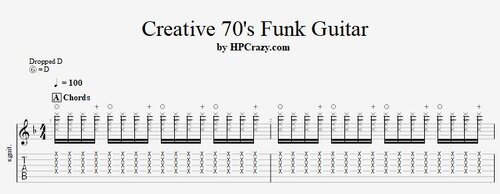 Here you find a selection of 70's funk guitar figures which have to be played with delay and a wahwah in order to achieve the 70's vibe. The backing track is included - it's really grooooovy. These files are associated to this tutorial :Free
 -
 Here you find a sponatious piano mediation improvisation in 432 Hz to the color ( Farbmusik ) Violet. Here a nearer description around 432 Hz and the color Violet :Free
 -
-
In fact yes I agree the course is " hell " but it's worth. I created a badge now for all those who passed the final test of this course : If you want I can add the badge to your account - since you passed the test
-
View File Rhythm Studies Here you find the entire course " Rhythm Studies " were students can learn to fix their rhythm and timing issues. The key to fix this issue is to know what rhythm is and to practice every aspect of rhythm with a click and directly on the fretboard. If you know how rhythm is written then you know what kind of rhythm pattern you are playing and how it sounds. This is an entire course " Rhythm Studies " were you start from the very beginning. Take every lesson very seriously. At the end of the studies it gets really difficult and if you don't know each module of this course very well you don't have a change in the last 2-3 lessons anymore to fulfill the task. Also take the written pauses very seriously. Every note has a beginning and an end. So also be precise on the endings of the notes. If you don't know rhythm notation at all please first go through the theory first : There are several ways you can practice the rhythm studies on the fretboard. The easiest one would be just by playing the rhythm you are reading with one note on the fretboard. I recommend that for players who are still in the intermediate range of their technical abilities. If you are an advanced player you can do the rhythm studies with a 4 bar chord progression ( Ex. 1 : G / C / Am / D or Ex. 2 Em / Am / C / D ) or whatever comes to your mind. Or you can also do the rhythm studies with picking patterns only on one chord. You are free to transport the rhythm you are reading on your fretboard. Here you can find a short tutorial where I show you how you can start working with the system : Here are the conditions : 1. You should not make any mistakes - max. 3 mistakes per lesson 2 . Play with a click of your choice. I would recommend 80 bpm but also try other speeds to get a feeling for the rhythm. 3. The first exercises are very easy. Take every lesson very serios and practice is as if you would record a CD. Try also to give musical expression to everything you play. 4. If you are also interested in blues or jazz you also need to do the studies in the ternary( shuffle ) groove. 5. Take your time - the point is not to play everything that it's played. The point is that you feel every note you are playing and to build automatisms in precisions and musical precision. Thats the main goal of these studies. 6. Don't expect results very fast. It can take months till you feel a substancial difference in your free playing. 7. Once you went through one modul try to transport what you learned in to your regular playing. If you need any help or advice please open up a blog and tell what your problems or concerns are. Describe your situation as precise as possible. Or if you need personal coaching on this and you want that your studies are getting monitored you can also book some private lessons. Doing the final test : If you went through all modules of the rhythm studies and you wish to make the final test you can book a private skype lesson. There we make an appointment and then I will send you a file of 3 - 4 pages on the difficulty level of the last module of the rhythm studies. Then you have 5 minutes time to view the pages and then you have to play them with sight reading with a click and I control how precise you were and how many mistakes you made. If you reached a presicion level of 75 % and did not make more than 5 mistakes you pass the test and you get the " rhythm study award " - or the confirmation that you fulfilled the task. The earliest time I recommend this test is 6 months after you started the studies. Submitter admin Submitted 03/25/2024 Category Theory & Exercises
-
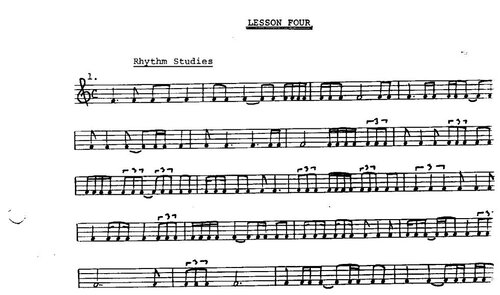 Here you find the entire course " Rhythm Studies " were students can learn to fix their rhythm and timing issues. The key to fix this issue is to know what rhythm is and to practice every aspect of rhythm with a click and directly on the fretboard. If you know how rhythm is written then you know what kind of rhythm pattern you are playing and how it sounds. This is an entire course " Rhythm Studies " were you start from the very beginning. Take every lesson very seriously. At the end of the studies it gets really difficult and if you don't know each module of this course very well you don't have a change in the last 2-3 lessons anymore to fulfill the task. Also take the written pauses very seriously. Every note has a beginning and an end. So also be precise on the endings of the notes. If you don't know rhythm notation at all please first go through the theory first : There are several ways you can practice the rhythm studies on the fretboard. The easiest one would be just by playing the rhythm you are reading with one note on the fretboard. I recommend that for players who are still in the intermediate range of their technical abilities. If you are an advanced player you can do the rhythm studies with a 4 bar chord progression ( Ex. 1 : G / C / Am / D or Ex. 2 Em / Am / C / D ) or whatever comes to your mind. Or you can also do the rhythm studies with picking patterns only on one chord. You are free to transport the rhythm you are reading on your fretboard. Here are the conditions : 1. You should not make any mistakes - max. 3 mistakes per lesson 2 . Play with a click of your choice. I would recommend 80 bpm but also try other speeds to get a feeling for the rhythm. 3. The first exercises are very easy. Take every lesson very serios and practice is as if you would record a CD. Try also to give musical expression to everything you play. 4. If you are also interested in blues or jazz you also need to do the studies in the ternary( shuffle ) groove. 5. Take your time - the point is not to play everything that it's played. The point is that you feel every note you are playing and to build automatisms in precisions and musical precision. Thats the main goal of these studies. 6. Don't expect results very fast. It can take months till you feel a substancial difference in your free playing. 7. Once you went through one modul try to transport what you learned in to your regular playing. If you need any help or advice please open up a blog and tell what your problems or concerns are. Describe your situation as precise as possible. Or if you need personal coaching on this and you want that your studies are getting monitored you can also book some private lessons. Doing the final test : If you went through all modules of the rhythm studies and you wish to make the final test you can book a private skype lesson. There we make an appointment and then I will send you a file of 3 - 4 pages on the difficulty level of the last module of the rhythm studies. Then you have 5 minutes time to view the pages and then you have to play them with sight reading with a click and I control how precise you were and how many mistakes you made. If you reached a presicion level of 75 % and did not make more than 5 mistakes you pass the test and you get the " rhythm study award " - or the confirmation that you fulfilled the task. The earliest time I recommend this test is 6 months after you started the studies.Free
 -
-