medikon
Premium
-
Joined
-
Last visited
-
-
Hi Hanspeter, It's great how you use these chords to give the song some energy and make it sound well-rounded. (I still need to get my fingers to cooperate, though) 🎸👍
-
-
-
Unfortunately, I've missed your Guitar Lab Sessions so far. I really like the format. You're not tied to a fixed “tutorial script” and can let your thoughts run free. This fingerpicking session is great, and I'll try to tune in live in the future. Thanks for that, Hanspeter.
-
-
-
-
-
-
-
-
 amazing, thank you!
 -
-
-
-
-
-
-
-
-
-
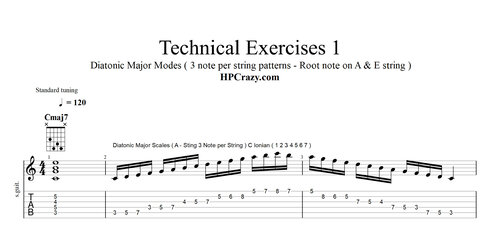
I also like this rule of thumb, which helps me to memorize the scale degrees in 3 notes per string. Described in this video by Michael Pillitiere: And of course Hanspeters famous Technical Exercise 1 https://www.hanspeterkruesi.com/members/files/file/4-technical-exercises-chords-modes-patterns-major-scales/ Uploading Attachment...
-
-
-
-
Let's start the puzzle 😉 Thanks!
-
Thank you Hanspeter, what you mentioned about 7th chords (7:30) is a cool rule of thumb! I knew that level V in the cadence should usually be a 7th chord, but I didn't know exactly why. Gemini replied to my question with this: The "rule of thumb" you're describing is not a hard-and-fast rule, but it is a very common and powerful technique. The practice of using a dominant 7th chord (V7) before a chord change is fundamental to what's known as a V-I cadence. Here's why it works and why it's so widely used: Tension and Resolution: A dominant 7th chord is inherently unstable and creates a strong sense of tension. The root of the chord is the fifth degree of the scale you are moving to (the "tonic"). The 7th of the chord creates a tritone with the 3rd, which is a very unstable interval. This tension creates a strong pull or need to resolve to the stable, tonic chord (the "I"). Creating Forward Motion: By placing a dominant 7th chord right before a new chord, you are essentially "setting up" the next chord. It creates a feeling of forward motion and expectation, making the chord change feel purposeful and satisfying. Defining the Key: This V-I relationship is the backbone of traditional harmony and is how we define a key. By playing a G7 chord, for example, the listener immediately anticipates a C major chord, which firmly establishes C as the tonic. Thanks and best regards, Roland
-
I spent a lot of time on this tutorial today. I don't know much about jazz yet. In your videos, you show us all the chords you use. But I need to dive a little deeper to really understand why, for example, an Ab9(b13) makes sense. I would like to take this opportunity to warmly recommend your accompanying data in the downloads. Your PDF with the chords is already helpful here. However, your Guitar Pro file in combination with the first-class backing track is amazing! I just added your MP3 to Guitar Pro 8 as an audio track. Both fit together perfectly right away. You are simply a pro. And not just on the instruments. Now I can slowly increase the tempo while practicing. The notes and backing track fit together perfectly at all times. Thank you for your first-class support. I can only recommend everyone to take advantage of these opportunities with the premium membership. Thanks Hanspeter 👍
-
Great News Hanspeter!! 🎸❤️👍
-